Study Strategies & Timetables: How to Balance Focus, Rest, and Wellness
Studying smarter—not harder—is the secret to achieving consistent academic success. The key lies in balance: building a structured timetable, eating for mental performance, and minimizing distractions that drain focus.
1/3/20261 min read
Study Strategies & Timetables: How to Balance Focus, Rest, and Wellness
Studying smarter—not harder—is the secret to achieving consistent academic success. The key lies in balance: building a structured timetable, eating for mental performance, and minimizing distractions that drain focus.
🧠 1. Create a Balanced Study-Rest Schedule
Your brain learns better with strategic breaks. The Pomodoro Technique—25 minutes of focus followed by 5 minutes of rest—helps maintain energy and retention.
Tips:
Schedule regular breaks to avoid burnout.
Alternate between difficult and light subjects.
Review, rest, and revisit to strengthen memory.
🥗 2. Fuel Your Brain with Smart Nutrition
Healthy food enhances alertness and comprehension.
Breakfast: Protein-rich meals like oats, eggs, or yogurt.
Lunch: Balanced meals with complex carbs and greens.
Snacks: Nuts, fruits, or smoothies over junk food.
Hydration: Drink plenty of water and avoid excess caffeine.
A nourished brain is more resilient, creative, and focused.
📱 3. Eliminate Digital Distractions
Technology should serve your studies, not steal your time.
Use productivity tools like Forest or Freedom.
Keep your phone in another room during deep work.
Turn off push notifications or use “Focus Mode.”
You’ll regain hours of productive time every week just by controlling your digital environment.
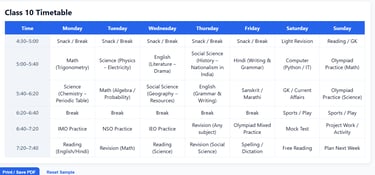
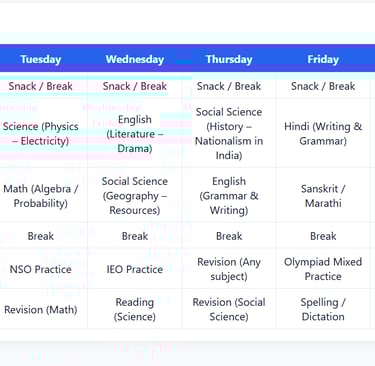
🗓️ 4. Sample Study Timetable
Click here for Free Sample Timetable
🌿 Final Thoughts
Effective study strategies combine discipline, self-care, and structure. By maintaining balanced routines, eating well, and focusing deeply without digital noise, students can achieve better results with less stress. Remember—academic excellence thrives on consistency and balance.